What Building an App Taught Me About Working with AI

Somewhere between watching my first college gymnastics meet and my fifteenth, I started actually caring about the scoring. Not in a frustrated fan way, more like a genuine curiosity about how you even judge something like that. What makes one score different from another? How does anyone agree?

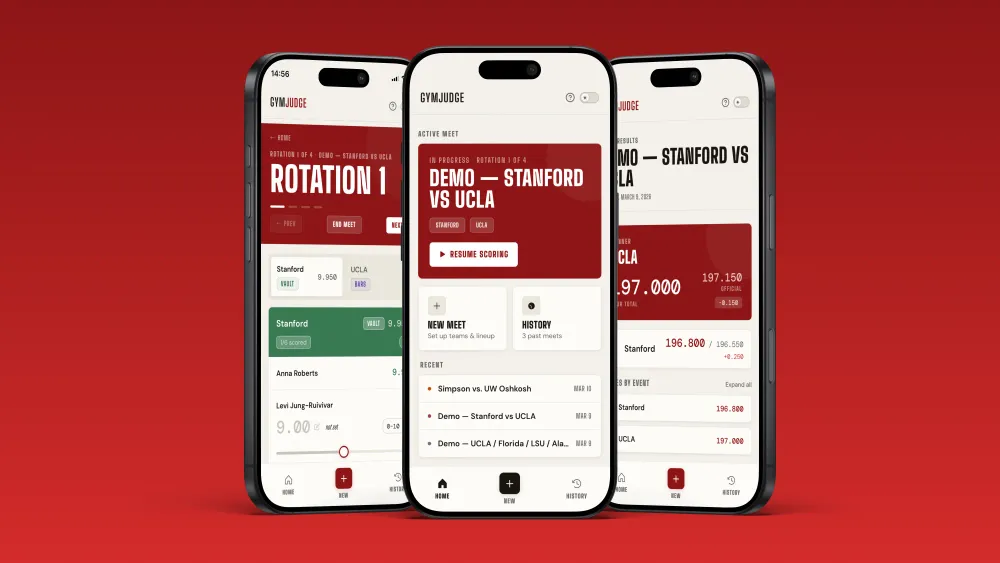
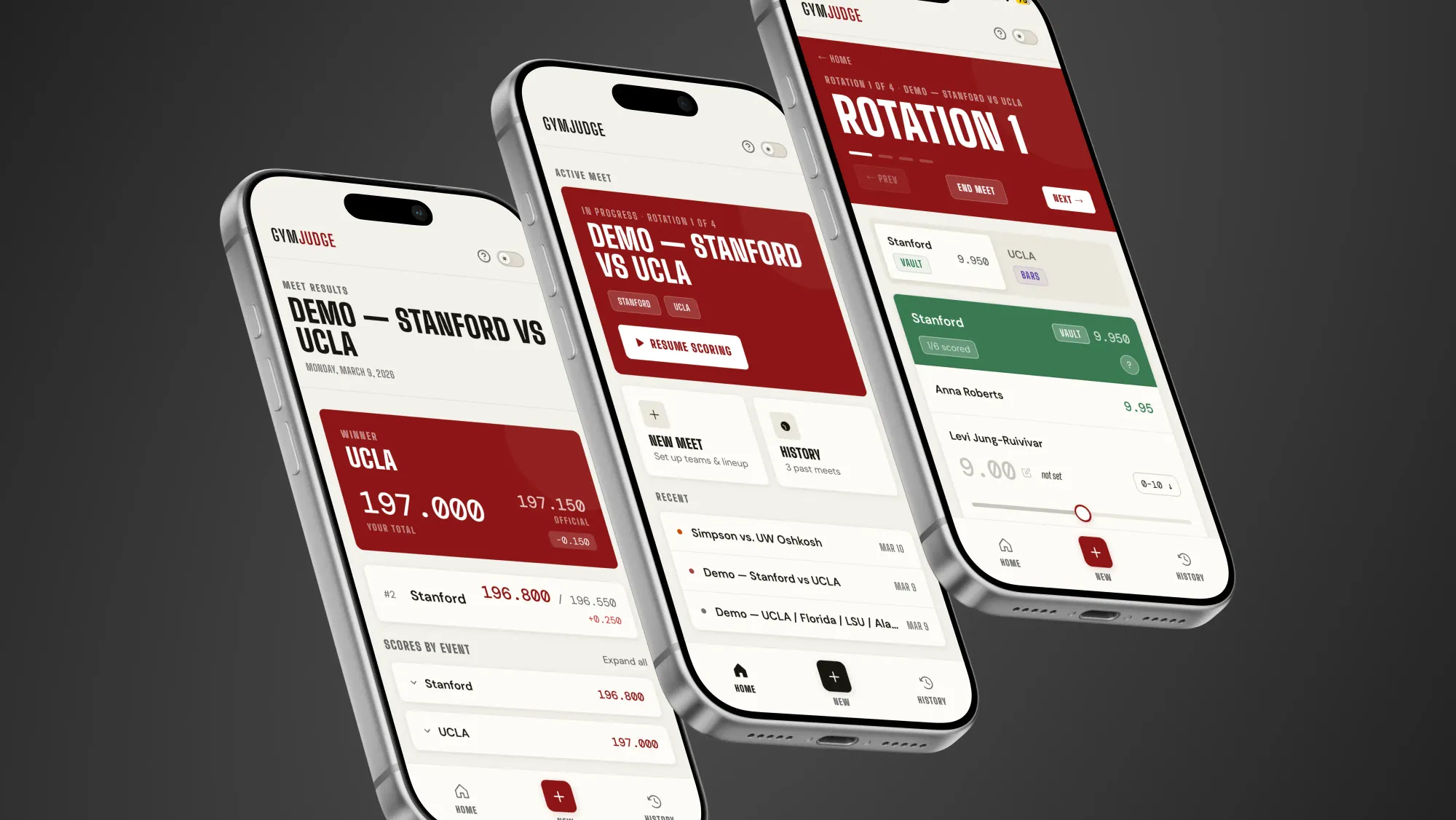
The more I watched, the more I wanted to understand it from the inside rather than just observe it from the couch. That ended up being the seed of a project — an app that lets you score each gymnast in real time and compare your calls to the official judges at the end of the meet. I'd also been wanting to find something real to test how far I could push AI as a collaborator, and this felt like the right excuse. I worked with Claude throughout, and it turned into one of the more interesting things I've worked on.

The first useful conversation wasn't about features. It was about what to leave out. Every time I tried to add complexity early, it got in the way. The version that actually got built was the one where we agreed to keep things simple and focus on the core experience first. That constraint turned out to be a design decision as much as anything else.
From there I learned pretty quickly that jumping straight into building was the wrong instinct. For anything with real design complexity, describing what I wanted and expecting a solution backfired every time. What actually worked was treating bigger features as conversation problems before they became building problems. I'd ask for reactions before asking for solutions, give specific notes, look at things a few different ways. Only after a few rounds of that did anything get made, and it went faster and cleaner because of it. Every time I skipped that step I ended up in the same conversation anyway, just with more to undo.

A lot of the work itself isn't exciting to describe. Bugs that came down to one wrong assumption. Errors that took several rounds to untangle. Moments where something looked right but felt off and it took a while to figure out why. But the loop of fix, check, fix again built something I didn't expect: a better instinct for where things go wrong. I started forming hypotheses before describing the problem out loud. That felt like progress separate from the app itself.

The question I started with, how far can I push this, gave way to a different one pretty quickly. What does this actually require from me? The calibration took time. Too specific and you get exactly what you said but not what you meant. Too open and you get something plausible that misses the point. Finding that middle is genuinely a skill. I also had to learn to say things I'd never say to a person. "Don't change this." "Assume I haven't considered that." With a human collaborator a lot goes unsaid. With Claude you have to surface assumptions that would normally just be understood. It felt blunt at first. Skipping it cost me time.

The other thing worth mentioning is knowing when to reset. The longer a project runs, the more old decisions accumulate and create drag. There were moments where starting fresh moved faster than trying to patch what was already there. Recognizing that point turned out to be its own kind of skill.
What surprised me most was realizing Claude isn't a replacement for what I do. It fits into how I work. And it rewards a specific kind of engagement. Show up without a point of view and you get output that's convincing but slightly off in ways that are hard to name. Show up with taste, with opinions, with the willingness to push back, and it's genuinely fast and genuinely good. It didn't change what good work requires. It just made the gap more obvious when I wasn't bringing it.

Thirty days in, I'm proud of what came together. My best guess is this would have taken months without AI in the mix — being able to quickly brainstorm, build, and test an idea in real time changed the math entirely. If you're into gymnastics or just curious, check out the app at the link below.

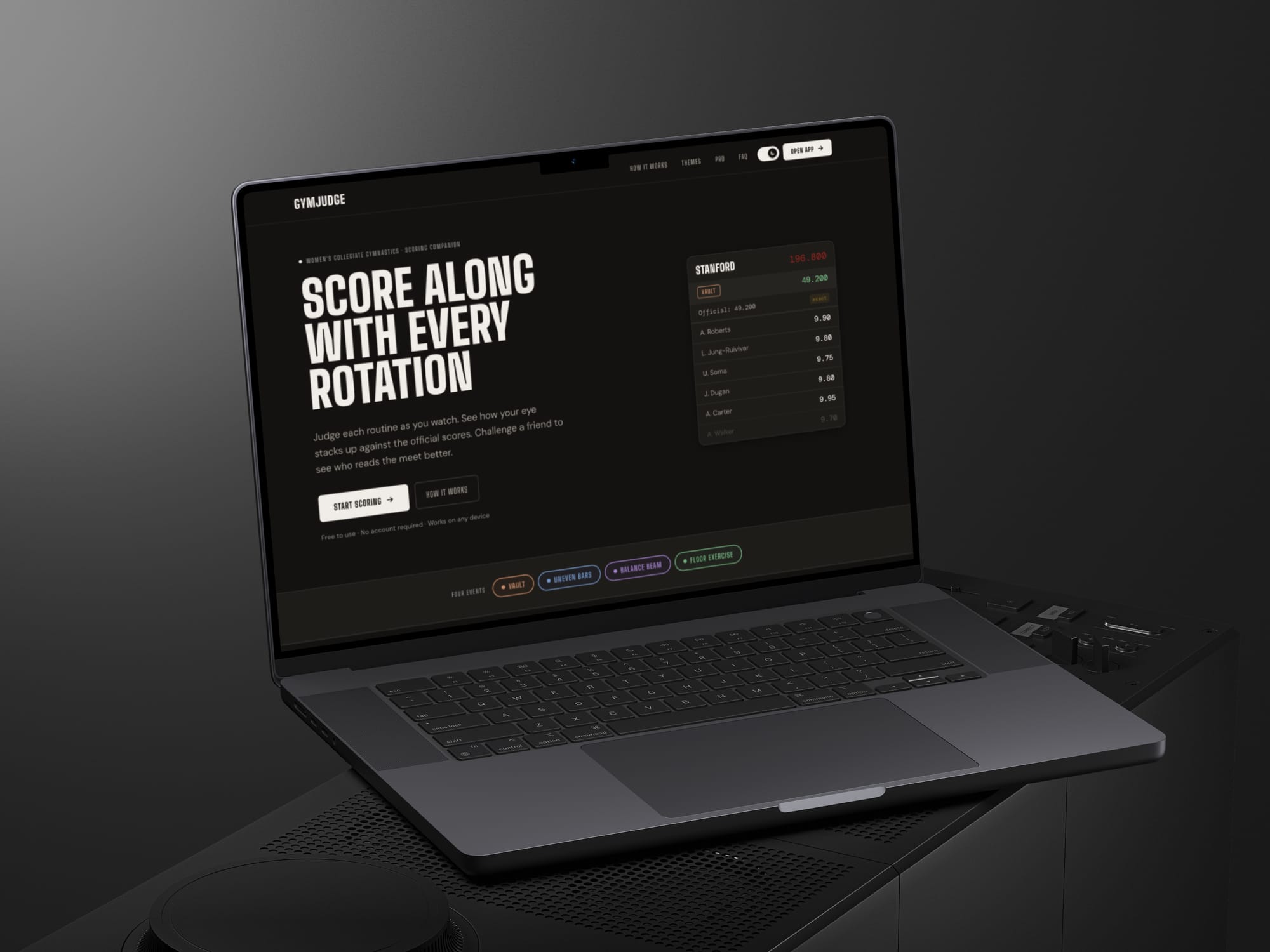
GymJudge — Score Along with Every Rotation
Score each routine as you watch. Compare your eye to the judges. Challenge a friend. GymJudge is the scoring companion for NCAA gymnastics fans.
ai

Japanese Ukiyo-e Woodblock Print Search

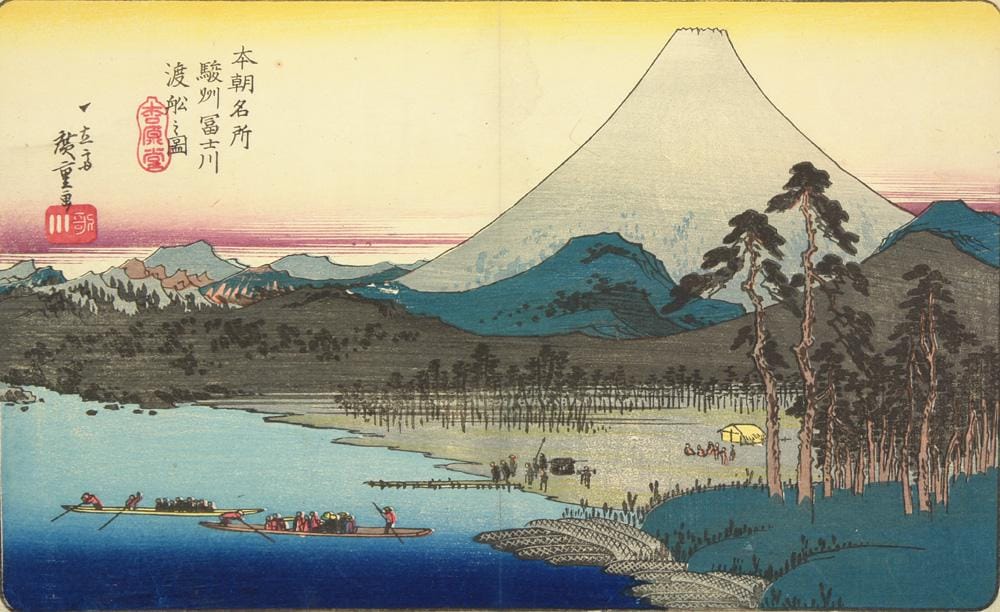
I’ve been browsing around Ukiyo-e for the last several days, just admiring the woodblock prints that have been catalogued there. I’ll open one, zoom in, and somehow end up twenty tabs deep. It’s easy to lose track of time.

What’s surprised me isn’t only the artwork, but the way the site organizes it. For something built in 2012, I'm very impressed with the process of how the site organizes such a large library of imagery:

Each print image is analyzed and compared against all other print images in the database. Similar prints are displayed together for comparison and analysis. Multiple copies of the same print are automatically lined up with each other and made viewable in a gallery for easy comparison.

Most of the prints date from the 17th through the 19th centuries, but they don’t feel distant. The flat color, strong outlines, and confident cropping feel surprisingly modern. It’s easy to see why artists outside Japan became captivated by them in the late 1800s, and why that influence still lingers.

Japanese Print Search and Database
Searches thousands of Ukiyo-e, Meiji, Shin Hanga, and Sosaku Hanga Japanese prints.
woodblock printing

Progress, not Perfection

“Just start.”

That advice is supposed to be freeing. For some people, it’s enough to get them moving. For me, it does the opposite. It kicks off a mental cascade: every step, every dependency, every unknown lined up at once. The thing I want to make begins editing itself in my head—quietly, relentlessly—into something perfect.

And that version rarely exists in reality. It almost never matches my actual skill set at that moment in time.

The problem, of course, is that creativity doesn’t work that way. It’s a practice. Ira Glass talks about this in The Gap: early on, your taste is good. You know what “great” looks like, but your ability hasn’t caught up yet. The only way to close that distance is to keep making things anyway. To produce work you already know falls short.

Intellectually, I understand that. Practically, I still resist it.

This blog is proof. It’s been sitting dormant for years, not because I didn’t have ideas, but because I kept trying to start it correctly. I wanted the right cadence, the right voice, the right framing. I wanted a version of the blog that felt fully formed before it existed at all.

Recently, while browsing swissmiss, I came across this TED talk:

It landed harder than I expected. Not because it said something new, but because it said something I was clearly ready to hear. That starting imperfectly isn’t a failure of discipline or ambition, it’s the only viable entry point.

I’m not much for New Year’s resolutions, but I can say this plainly: I didn’t create enough in 2025. I spent too much time refining ideas in my head and not enough time putting things into the world where they could be shaped by friction, feedback, and time.

So this is me starting this blog. Not as a declaration, and not as a promise. There’s no posting schedule. No commitment to consistency. Just movement.

Progress, not perfection.

Let's see where the adventure takes me.

creativity

Down the Rabbit Hole

‘Down the rabbit hole’ is an English-language idiom or trope which refers to getting deep into something, or ending up somewhere strange. Lewis Carroll introduced the phrase as the title for chapter one of his 1865 novel Alice’s Adventures in Wonderland, after which the term slowly entered the English vernacular. The term is usually used as a metaphor for distraction. In the 21st century, the term has come to describe a person who gets lost in research or loses track of time while using the internet.

Source: Wikipedia

There’s something fun about finding a topic of interest and spending hours on Wikipedia chasing more information and knowledge about it. The thing is, it just stays in my brain until an opportunity arises to dazzle friends with a random tidbit or have some confidence behind an answer at bar trivia on a Tuesday night.

The concept behind a site like lo-fy has been on my mind for some time. I wanted an excuse to dive a little deeper or spend more time learning about things I find interesting and having a place to catalog it all.

If you’re into this kind of nerdery, then welcome aboard. This will be a lot of fun!

lo-fy